Best Therapeutic Approaches for Childhood Apraxia of Speech That Help Children Communicate More Clearly
When a child struggles to speak clearly, many parents assume it is simply a speech delay that will improve with time. However, Childhood Apraxia of Speech (CAS) is different. Children with CAS often know exactly what they want to say, but their brains have difficulty planning and coordinating the movements needed to produce speech.
Effective therapy can help children develop stronger speech skills and gain confidence in their communication abilities. The key is choosing approaches designed specifically for the unique challenges associated with Childhood Apraxia of Speech.
Understanding Why Childhood Apraxia of Speech Requires a Different Therapy Approach
Not all speech disorders are the same, which means they should not all be treated the same way.
With Childhood Apraxia of Speech, the challenge often lies in motor planning. The brain knows what it wants to say but struggles to send the correct instructions to the muscles responsible for speech.
This is why children with CAS may:
-
Say the same word differently each time they attempt it.
-
Have difficulty combining sounds and syllables.
-
Struggle with longer or more complex words.
-
Appear to understand language better than they can express it.
Because CAS involves planning and coordinating speech movements, therapy must focus heavily on repetition, practice, and helping the brain learn new speech patterns. Traditional articulation exercises alone are often not enough.

Exploring the Most Effective Therapeutic Approaches for Childhood Apraxia of Speech
Motor-Based Speech Therapy
When experts discuss effective treatment for CAS, motor-based speech therapy is often considered the foundation of intervention.
Think of it like learning to play a musical instrument. A child does not master a piano piece after hearing it once. Success comes through repeated practice, feedback, and gradual muscle memory building. Speech works in a similar way.
Motor-based therapy helps children repeatedly practice speech movements so the brain can strengthen the connections needed for clear communication. Instead of focusing only on individual sounds, therapists help children learn how sounds, syllables, and words work together during natural speech.
Sessions are often highly structured and involve frequent repetition because consistency helps the brain develop more reliable speech patterns over time.

Dynamic Temporal and Tactile Cueing
Dynamic Temporal and Tactile Cueing (DTTC) is one of the most widely recognized treatment approaches for Childhood Apraxia of Speech.
The goal is simple: help children experience success while gradually increasing independence.
Rather than immediately asking a child to produce a word on their own, the therapist provides different levels of support. This may include:
-
Demonstrating the word.
-
Saying the word together with the child.
-
Providing verbal cues.
-
Adjusting the pace of speech.
-
Repeating words multiple times during practice.
As the child's skills improve, the therapist slowly reduces support until the child can produce the word more independently
.
This approach is particularly helpful for children with moderate-to-severe CAS because it allows them to practice speech without becoming overwhelmed or discouraged.
Prompts for Restructuring Oral Muscular Phonetic Targets (PROMPT) Therapy
Some children with Childhood Apraxia of Speech have difficulty understanding how their mouth, lips, tongue, and jaw should move to create specific sounds.
PROMPT therapy addresses this challenge by incorporating gentle touch cues to guide speech movements.
During therapy, the speech-language pathologist may lightly touch certain areas of the face to help the child understand the positioning and movement needed for accurate speech production.
For many children, hearing instructions alone may not be enough. Physical cues provide an additional layer of information that helps them better understand how speech movements should feel.
PROMPT therapy can be especially beneficial for children who struggle with coordination and consistency when producing words and phrases.


Rapid Syllable Transition Training
Rapid Syllable Transition Training, often called ReST, focuses on helping children produce smooth and accurate transitions between syllables.
Many children with CAS can produce individual sounds correctly but struggle to combine them into longer words. The difficulty often occurs during the transition from one syllable to another.
ReST helps children practice:
-
Speech rhythm.
-
Stress patterns.
-
Syllable transitions.
-
Accurate sequencing of sounds.
The approach often uses specially designed words, such as "maboon," "fabik," or "dovay." These words have no meaning, which encourages children to focus on producing accurate speech movements, rhythm, and stress patterns rather than recalling familiar vocabulary. This allows therapists to target the underlying motor planning skills that are affected by Childhood Apraxia of Speech.
Augmentative and Alternative Communication
Some parents worry that using communication devices or visual supports will discourage a child from speaking. In reality, research has shown that Augmentative and Alternative Communication (AAC) often supports speech development rather than replacing it.
AAC tools may include:
-
Picture communication boards.
-
Speech-generating devices.
-
Communication apps.
-
Visual symbols.
For children with CAS, AAC provides a way to express needs, thoughts, and feelings while speech skills continue to develop.
Reducing communication-related frustration can help children stay engaged socially and academically during speech therapy.

Why Family Participation Plays an Important Role in Childhood Apraxia of Speech Therapy
Therapy does not end when a session is over.
Children often make the greatest progress when parents and caregivers actively support practice at home.
This does not mean turning every conversation into a therapy lesson. Instead, it involves creating opportunities for meaningful communication throughout daily activities.
Parents can support progress by:
When therapy strategies are reinforced at home, children receive more opportunities to strengthen the skills they are learning.
-
Being patient during communication attempts.
-
Maintaining consistency between therapy sessions.
-
Practicing therapist-recommended activities.
-
Encouraging communication during play.
-
Providing positive reinforcement.
Early Intervention Creates More Opportunities for Long-Term Communication Success
The earlier a child receives appropriate support, the more opportunities they have to develop effective communication skills during critical stages of growth and development.
Early intervention can help:
-
Improve speech intelligibility.
-
Reduce communication frustration.
-
Build confidence.
-
Support social development.
-
Strengthen academic readiness.
Even if a child is not diagnosed until later, therapy can still be highly beneficial. However, identifying challenges early often allows children to receive support before communication difficulties begin affecting other areas of life.
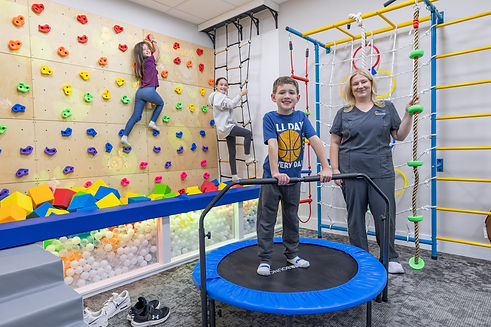

Ready to Help Your Child Communicate More Clearly?
At Speechpath and Associates LLC, our experienced speech-language pathologists create personalized treatment plans based on each child’s unique strengths, challenges, and goals. We use evidence-based strategies to support speech development while partnering closely with families throughout the process.
Contact Speechpath and Associates today to learn how our team can help your child develop the communication skills needed to thrive at home, in school, and in everyday life.